Can a Turbocharged Three-Cylinder Really Compete in a Four-Cylinder World?
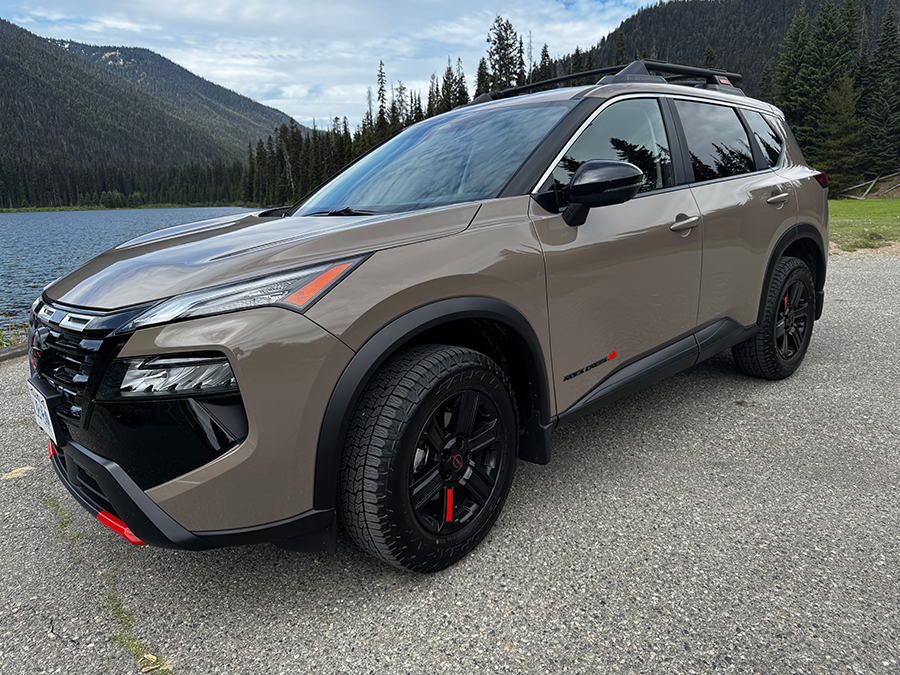
Photo: Marissa Baecker
Introduction
The Okanagan is the kind of place that encourages you to explore. Mountain highways lead to gravel backroads, trailheads, lakes, ski hills and campsites, often within the same weekend. It’s also the kind of environment that quickly exposes the difference between an SUV that simply looks adventurous and one that actually fits an active lifestyle.
That made the 2026 Nissan Rogue Rock Creek an interesting vehicle to spend a week with. For this 2026 Nissan Rogue Rock Creek review, I wanted to find out whether Nissan’s adventure-focused compact SUV could actually deliver when faced with the highways, mountains and backroads of British Columbia.”
Nissan has taken its popular compact SUV and given it a more adventurous personality, adding all-terrain tires, increased ground clearance, a tubular roof rack, Intelligent All-Wheel Drive and some distinctive Rock Creek styling. But beneath the rugged exterior is something that might make a few buyers pause: a 1.5-litre turbocharged three-cylinder engine producing 201 horsepower and 225 lb-ft of torque.
I’ll admit, I wondered about it too. In a fiercely competitive compact SUV market filled with four-cylinder alternatives, could three cylinders really be enough—especially when faced with British Columbia’s steep mountain grades, high speed mountain highway passing and elevation changes?
After a week of driving the 2026 Nissan Rogue Rock Creek through the Okanagan and beyond, I discovered that the number of cylinders under the hood tells surprisingly little of the story.
Sometimes, less really is more.
Rugged Looks With a Purpose
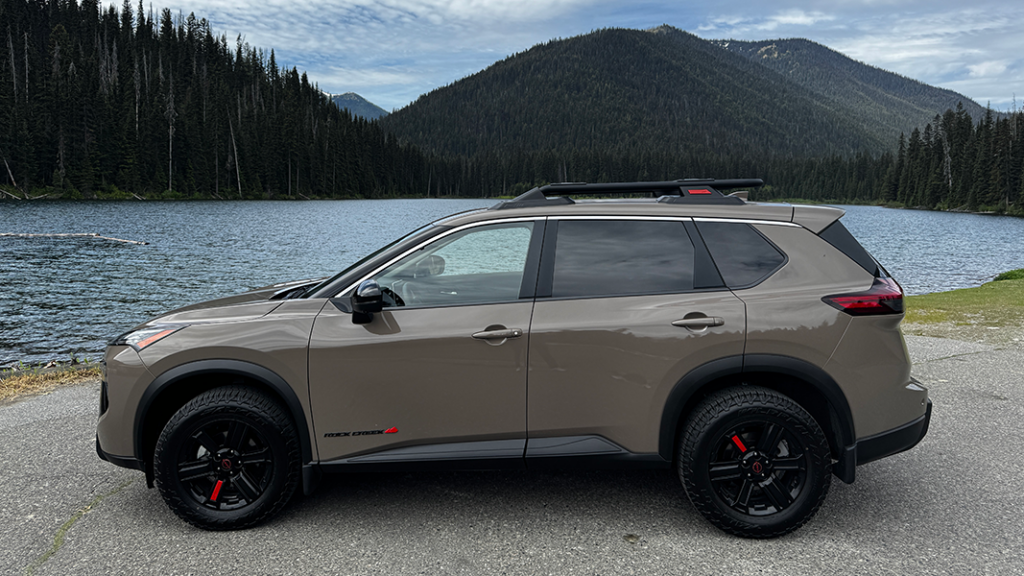
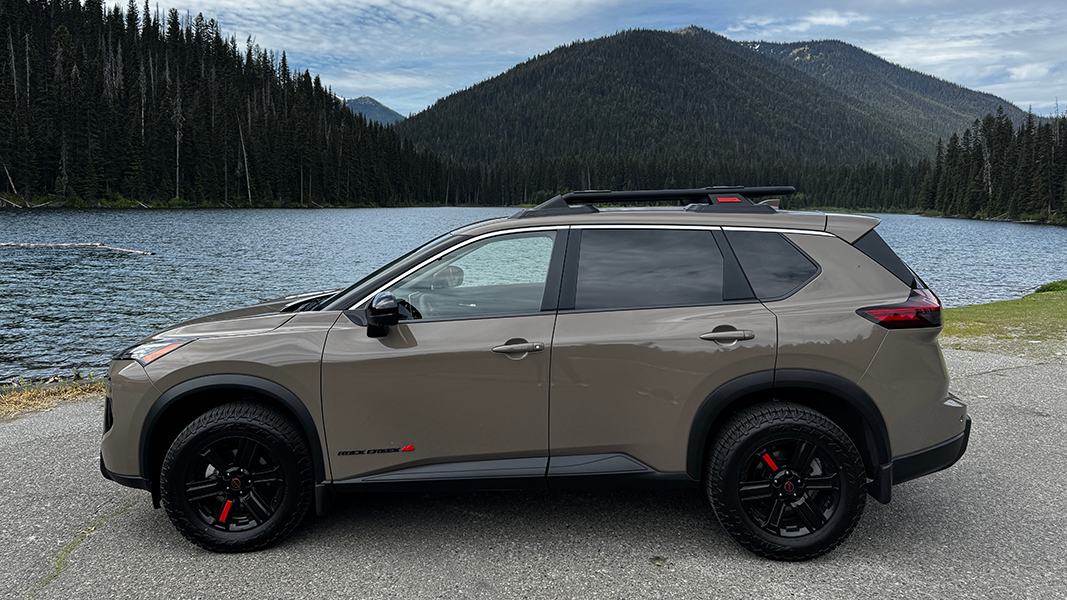
At first glance, the 2026 Nissan Rogue Rock Creek makes it clear that this isn’t the conventional Rogue. Nissan has taken the familiar shape of its compact SUV and given it a noticeably tougher personality, without going so far that the Rock Creek looks out of place pulling into the office on Monday morning.
Up front, a unique Rock Creek fascia and black grille with a mesh insert give the SUV a more assertive appearance. LED headlights and signature daytime running lights retain the clean, modern look of the Rogue, while the darker exterior details begin to distinguish the Rock Creek from the rest of the lineup.
The transformation becomes more obvious from the side. Dark-painted 17-inch alloy wheels are wrapped in 235/65R17 all-terrain tires, providing both a more rugged stance and some genuine usefulness once the pavement gives way to gravel. Gloss-black mirror caps and exterior accents continue the theme, while Rock Creek badging provides a subtle reminder that this isn’t simply another Rogue.
Up top, the tubular roof rack may be one of the most relevant additions for the kind of buyer Nissan is targeting. Skis, camping equipment, kayaks and other oversized adventure gear inevitably have to go somewhere, and having that additional carrying capacity expands what you can realistically bring along for the weekend.
Around back, the design remains relatively understated. A power liftgate provides easy access to the cargo area, while the overall shape retains the practicality and proportions that make the Rogue easy to live with every day.
That’s really the appeal of the Rock Creek treatment. Nissan hasn’t tried to turn the Rogue into a hardcore off-roader. Instead, it has added the equipment and styling that make sense for someone whose idea of adventure might involve a forestry road, snowy trailhead, remote campsite or weekend in the mountains—while still needing an SUV that’s perfectly comfortable handling the daily commute.
Three Cylinders — But Don’t Underestimate It
Under the hood is perhaps the most interesting part of the 2026 Nissan Rogue Rock Creek: a 1.5-litre VC-Turbo three-cylinder engine producing 201 horsepower and 225 lb-ft of torque. It’s paired with Nissan’s Xtronic continuously variable transmission and Intelligent All-Wheel Drive.
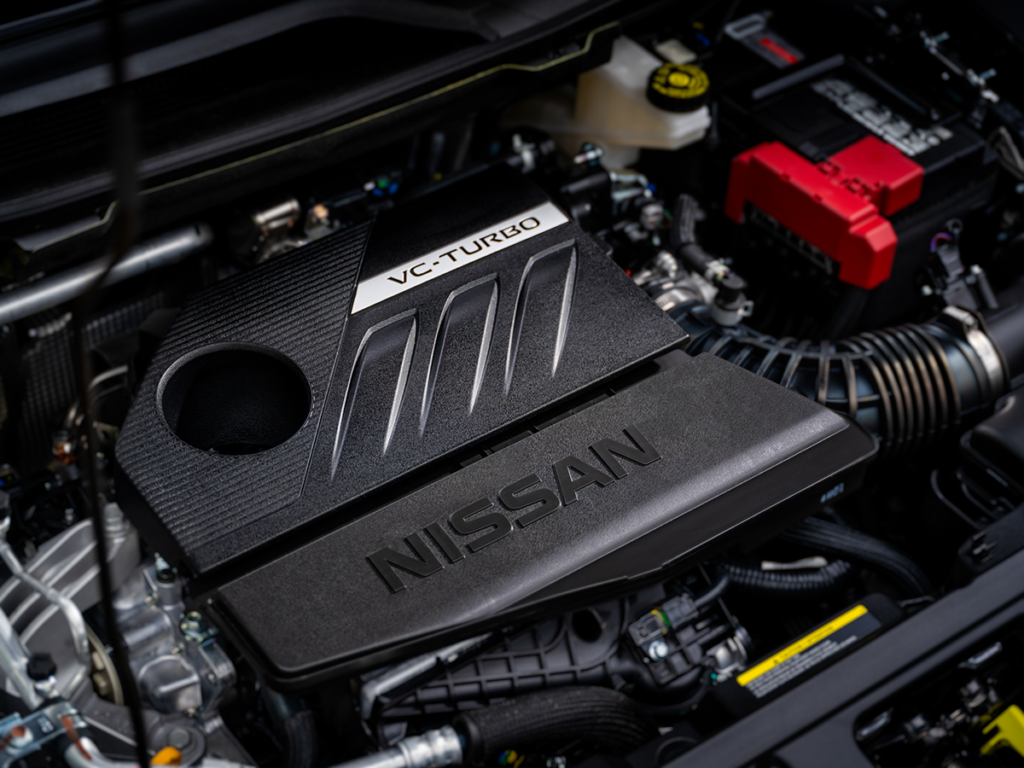
Three cylinders may not sound particularly impressive in a compact SUV market where four-cylinder engines are the norm, and I’ll admit it was one of the things I questioned before spending a week with the Rogue. On paper, it’s easy to assume that one fewer cylinder must mean compromising performance. Behind the wheel, however, the Rock Creek told a very different story.
The turbocharged engine delivers its torque early, and that becomes particularly noticeable when accelerating onto the highway or climbing a grade. Driving through British Columbia’s mountains gave the little three-cylinder plenty of opportunities to prove itself, and this was where it genuinely surprised me. The Rogue never felt like it was struggling for power. It remained responsive on long climbs and provided the confidence I wanted when it was time to accelerate or pass slower traffic.
The Xtronic CVT works with the engine to keep that power accessible, while selectable drive modes allow the Rogue to adapt to changing conditions. Combined with Intelligent All-Wheel Drive and Hill Descent Control, the Rock Creek has tools that become particularly relevant when pavement turns to gravel, conditions deteriorate or the route becomes a little more adventurous.
Is this a performance SUV? No — and it isn’t pretending to be. What impressed me was how little I thought about the fact that I was driving a three-cylinder after the first few days. Instead of feeling like a compromise, the powertrain felt remarkably well suited to the size and purpose of the Rogue.
And perhaps that’s the best argument Nissan can make for its three-cylinder engine: stop counting cylinders and drive it.
Inside the Rogue Rock Creek: Practicality Comes First
Climb inside the Rogue Rock Creek and the rugged exterior gives way to a cabin that’s comfortable, practical and refreshingly straightforward. Nissan hasn’t tried to reinvent how an interior should work. Instead, the controls are logically positioned, there’s plenty of useful storage, and the overall layout is easy to understand from the moment you get behind the wheel.
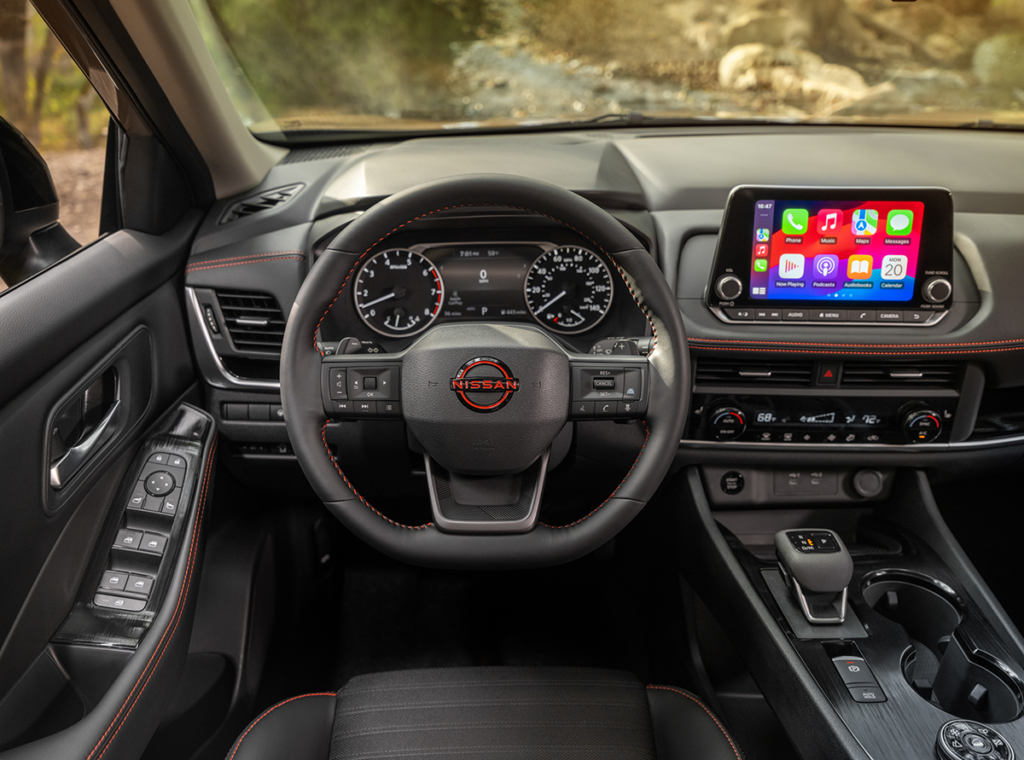
The Rock Creek-exclusive TailorFit leatherette seats help distinguish this model from the rest of the Rogue lineup, complete with embroidered Rock Creek logos and contrast stitching. Heated front seats and a heated steering wheel are welcome additions for Canadian winters, while the eight-way power driver’s seat provides plenty of adjustment. The upright seating position also provides good visibility around the vehicle.
Across the dashboard, the design is clean and uncomplicated. The centre display sits high enough to reference without looking too far away from the road, but what I particularly appreciate is that Nissan hasn’t abandoned physical controls. Traditional knobs and buttons remain for frequently used functions such as climate and audio, so adjusting the temperature or volume doesn’t require digging through layers of touchscreen menus.
The centre console is equally practical. Along with the usual places for phones, keys and other small items, the open storage area beneath the console creates a surprisingly useful space for things you don’t necessarily want rolling around the cabin. Add the glove box and other storage areas throughout the Rogue, and there’s no shortage of places to stash everything that inevitably comes along on a road trip.
Room for Passengers — or a Night Under the Stars
There’s plenty of usable space in the second row as well. The rear seats offer good passenger room and a 60/40 split-folding design, giving you the flexibility to balance passengers and cargo depending on what the day requires.
Fold the entire rear seat down, however, and the Rogue takes on another role.
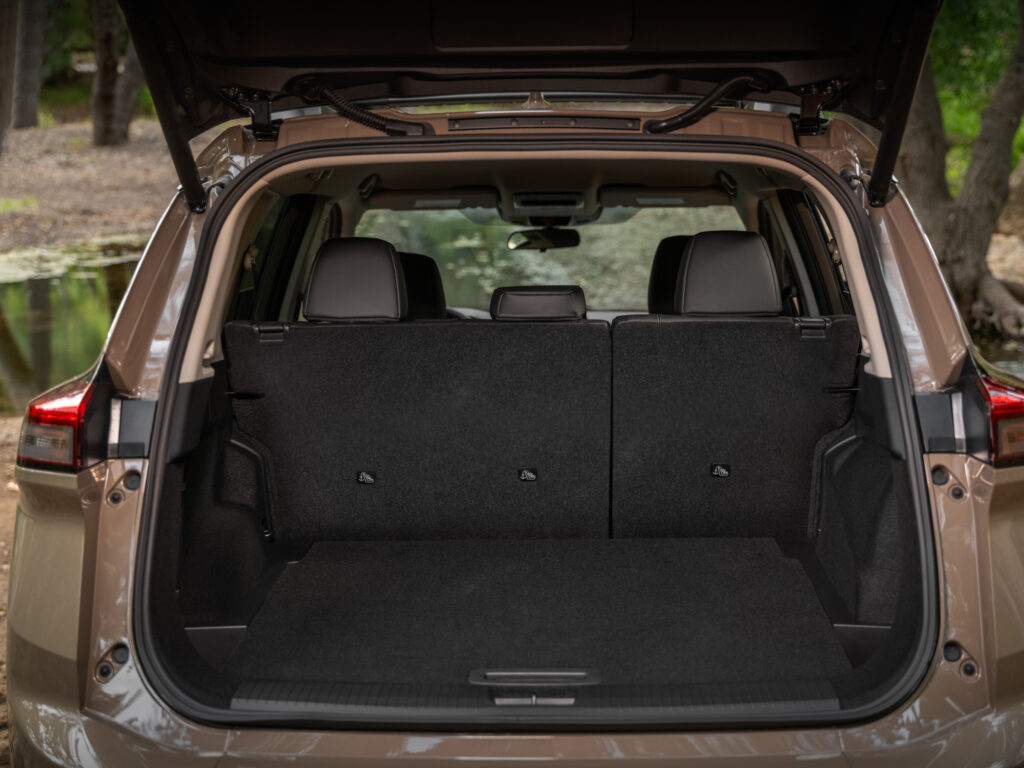
There’s enough space in the back for a foam sleeping pad and an overnight setup, something I immediately appreciated from an adventure perspective. Camping in the British Columbia backcountry can mean changing weather, uneven ground and the occasional curious critter wandering through camp. Sometimes I’d simply rather sleep inside the vehicle than pitch a tent on the ground.
It also means the Rogue can become an impromptu shelter when plans change. Throw a foamie and sleeping bag in the back and you’ve got a comfortable place to spend the night while remaining enclosed inside the vehicle.
And when you’re not sleeping back there, that same space provides plenty of versatility for photography equipment, camping gear, luggage or whatever else the weekend happens to require.
That’s the kind of practicality that makes the Rock Creek’s adventure theme feel like more than just styling.
Technology and Safety: Useful Without Being Overwhelming
The Rogue Rock Creek takes a relatively straightforward approach to technology. Wired Apple CarPlay and Android Auto make smartphone integration easy, while USB-C ports help keep devices charged for both front and rear passengers. It’s a system that provides the connectivity most drivers want without making technology the dominant feature of the cabin.
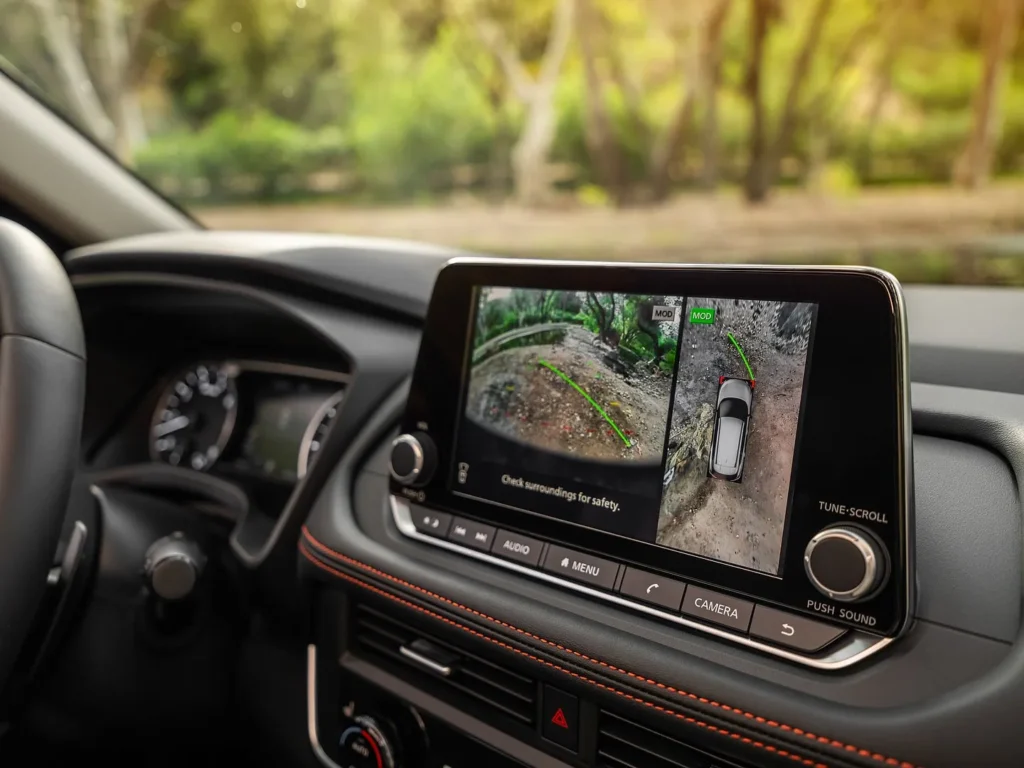
One feature that stands out—particularly given the Rock Creek’s more adventurous intentions—is Nissan’s Intelligent Around View Monitor with Off-Road Mode. The system uses multiple cameras to provide a better view of what’s immediately around the vehicle, which can be just as useful when navigating a tight parking space as it is when trying to see obstacles on rough or narrow terrain.
Safety Comes Standard
Nissan also equips the Rogue Rock Creek with a comprehensive collection of driver-assistance and safety technologies, including:
- Intelligent Cruise Control
- Intelligent Emergency Braking with Pedestrian Detection
- Intelligent Forward Collision Warning
- Blind Spot Warning
- Rear Cross Traffic Alert
- Lane Departure Warning
- Rear Intelligent Emergency Braking
- Intelligent Around View Monitor with Moving Object Detection
- Hill Start Assist
- 10 airbags
There’s a lot happening behind the scenes, but that’s exactly where I prefer these systems to stay. Good driver-assistance technology shouldn’t constantly remind you that it’s there; it should provide another layer of awareness and step in when you actually need it.
For a vehicle designed to transition between urban driving, long highway trips and weekend adventures, the Rogue Rock Creek delivers a reassuring combination of technology without making the driving experience feel unnecessarily complicated.
Three Cylinders Meet the Mountains
This is where the Rogue Rock Creek surprised me most.
Living in British Columbia means there’s no shortage of opportunities to find out whether a vehicle has enough power. Long grades, elevation changes, winding mountain highways and the need to confidently pass slower traffic can expose an underpowered vehicle pretty quickly.

Considering the Rogue is powered by a 1.5-litre three-cylinder engine, I expected there might be moments when I wished for a little more. Instead, the opposite happened.
With 225 lb-ft of torque available, the turbocharged engine feels stronger than its size suggests. Acceleration is responsive, highway merging is easy and, most importantly for me, the Rogue didn’t feel like it was struggling when the road started climbing.
The Xtronic CVT also works well with the engine. I’m not always a fan of the disconnected feeling some continuously variable transmissions can produce, particularly when they’re asked for more power on a steep grade, but the combination here works surprisingly well. The Rogue gets on with the job without constantly drawing attention to what the transmission is doing.
Ride quality is another strength. The Rock Creek’s all-terrain tires might suggest some compromise in everyday comfort, but on pavement the Rogue remains composed and comfortable. Rougher surfaces are handled without the suspension becoming overly soft, while the elevated driving position and predictable handling make it an easy SUV to settle into for longer journeys.
Move onto gravel and the Rock Creek starts to make even more sense. Intelligent All-Wheel Drive, selectable drive modes, all-terrain tires and the additional visibility provided by the Around View Monitor give you useful tools when conditions become less predictable. It’s not pretending to be a hardcore off-road vehicle, but that’s not really the point.
The majority of owners aren’t rock crawling on Saturday morning. They’re heading to a trailhead, campsite, ski hill, lake or down a forestry road—and then driving the same vehicle to work on Monday.
That’s where I think the Rogue Rock Creek finds its sweet spot.
After a week behind the wheel, I wasn’t thinking about how Nissan managed to make a three-cylinder engine work in a compact SUV.
I had stopped thinking about the number of cylinders altogether.
The Okanagan Test: Does the Rogue Rock Creek Pass?
Living in the Okanagan asks a lot from a vehicle. One day might involve errands around town, the next a highway run over the mountains, and the weekend could mean skis, hiking gear, camera equipment or a trip down a gravel road in search of somewhere new. That’s the thinking behind my Okanagan Test: forget what the brochure promises and look at how a vehicle actually fits the way we live.
The Rogue Rock Creek checks a surprising number of those boxes.
Mountain driving: This was probably its biggest test for me. The turbocharged three-cylinder had no trouble with the grades I encountered, with enough torque for climbing and confident highway passing. After a week behind the wheel, any concern I had about choosing three cylinders in a four-cylinder market had pretty much disappeared.
Highway comfort: The Rogue is comfortable and easy to drive over longer distances. The seating position provides good visibility, the ride remains composed and there’s enough driver-assistance technology working in the background to make longer highway stretches less demanding.
Adventure capability: All-terrain tires, Intelligent All-Wheel Drive, selectable drive modes, Hill Descent Control and the Around View Monitor with Off-Road Mode give the Rock Creek useful capability when the pavement ends. It’s not a hardcore off-roader, nor does it need to be. For gravel roads, trailheads, campsites and the places most owners are realistically going to explore, the package makes sense.
Cargo and gear: Between the cargo area, folding rear seats and tubular roof rack, there’s plenty of flexibility for an active weekend. Camera equipment, camping gear, skis and the assorted stuff that inevitably comes along for an Okanagan adventure all have somewhere to go.
And could I sleep in it? Absolutely. Fold the rear seats down, add a foamie and sleeping bag, and there’s enough room to create a comfortable sleeping space inside. For me, that’s a genuine advantage when camping in the backcountry. I’m off the ground, protected from the weather and have a solid barrier between me and whatever curious four-legged visitor might wander through camp.
So, does the 2026 Nissan Rogue Rock Creek pass the Okanagan Test?
Yes.
It’s comfortable enough for everyday life, capable enough for the places I realistically want an adventure SUV to take me, practical enough to carry the gear that comes along for the ride—and that little three-cylinder proved far more impressive in the mountains than I expected.
The Verdict: Sometimes Less Really Is More
The 2026 Nissan Rogue Rock Creek I tested had a base MSRP of $41,398 CAD. With Pearl Paint added, the price rose to $41,648, and with freight and PDI, the total came to $43,678 CAD before taxes and licensing.
In today’s compact SUV market, that’s a lot of vehicle for the money—particularly when you consider the Intelligent All-Wheel Drive, all-terrain tires, tubular roof rack, Around View Monitor with Off-Road Mode and the collection of comfort and safety features included with the Rock Creek.
But specifications aren’t what I’ll remember most about this Rogue.
I’ll remember how much it surprised me.
I started the week wondering whether a turbocharged three-cylinder engine was going to feel like a compromise, particularly on the mountain highways I drive regularly. By the end of the week, I had stopped thinking about the number of cylinders altogether.
The Rogue Rock Creek isn’t a hardcore off-roader, and it doesn’t need to be. It’s an everyday compact SUV with enough capability to encourage you to take the gravel road, explore a little farther, carry the gear that comes with an active lifestyle and even provide somewhere comfortable to sleep when the adventure lasts longer than expected.
It’s easy to drive, comfortable enough for a long road trip, practical enough for everyday life and surprisingly capable when the road starts climbing or the pavement disappears.
For buyers who want one vehicle that can handle the Monday morning commute and still be ready for whatever the weekend brings, the Rogue Rock Creek makes a compelling argument.
Three cylinders? I wouldn’t let that number stop you from taking one for a drive.
Sometimes less really is more.